Introduction
For years, the creator economy has had a simple obsession: more followers. More followers meant more reach, more views, more brand deals, and supposedly, more money. But there is a problem with that equation: not every follower actually cares enough to buy, share, or stick around.
Imagine having 100,000 followers, but only a tiny percentage regularly watches your content, remembers your latest project, or would spend $30 on something you created. Now imagine having just 1,000 people who actively follow your work, recommend you to friends, collect your products, and immediately show up when you launch something new. Which audience would you rather build a business around?
That question sits at the heart of the emerging superfan economy. The creator economy is gradually moving beyond the race for reach and toward something deeper: building audiences that feel connected enough to participate in a creator's world. In this new model, a smaller group of highly engaged fans can be far more valuable than a massive audience that rarely interacts.
From Followers to Fans: The Creator Economy Is Getting Deeper
A follower is easy to acquire. Someone sees a video, likes it, taps “Follow,” and moves on. A fan is different. They recognize your style, look forward to your next post, remember your running jokes, and care about what you create beyond a single piece of content.
A superfan takes that relationship one step further. They do not simply consume your content; they participate in your world. They might buy your merch, collect products related to your IP, join your community, share your work without being asked, or follow you across platforms to keep up with what you create.
This creates a very different value ladder:
Follower → Fan → Customer → Superfan
The important part is that creators do not necessarily need millions of people at the top of this ladder. They need enough people to move further down it.
That is why the idea of 1,000 true fans remains so relevant. The original concept, popularized by Kevin Kelly, suggested that a creator could build a sustainable career with a relatively small number of dedicated supporters who were willing to spend meaningfully on their work. Today, creators have more ways than ever to turn that loyalty into products, communities, experiences, and long-term business.
Why 1,000 True Fans Can Beat 100,000 Followers
The difference comes down to intent.
A follower gives you attention. A superfan gives you attention, trust, participation, and purchasing power.
Consider two creators. Creator A has 100,000 followers and launches a $30 product that only 0.2% of their audience buys. That produces 200 purchases. Creator B has 5,000 followers, but 10% of them are deeply invested fans. If even a meaningful portion of those fans purchase the same product, Creator B can generate comparable commercial results with a fraction of the audience.
The numbers will vary dramatically from creator to creator, of course. The point isn't that 1,000 fans magically outperform 100,000 followers. The point is that audience size alone is a poor measure of commercial value.
Superfans are valuable because their relationship can compound. They might purchase once, return for a new collection, share a product with friends, or buy a limited edition because they do not want to miss it. They can even become part of the marketing engine themselves.
That makes fan monetization fundamentally different from simply selling advertising around an audience. Instead of monetizing attention once, creators can build multiple opportunities around an existing relationship.

Fans Don't Just Buy Products. They Buy Belonging.
So why would someone buy a $35 hoodie when they could buy a perfectly good hoodie for $20?
Because the hoodie may not really be the product.
For a devoted fan, merchandise can represent identity, belonging, nostalgia, humor, or a connection to a creator they genuinely care about. A character printed on a shirt can become a symbol that says, “I'm part of this community.” A limited-edition figurine can become something worth collecting rather than simply using. A creator's inside joke can become a physical object that only their community fully understands.
This is why the strongest creator merch does more than display a name or logo. It gives fans something tangible that represents the culture surrounding a creator.
Think about the difference between saying, “I follow this creator,” and saying, “I own something from this creator's world.” The second statement feels much more personal.
For creators, that opens up an important opportunity. Instead of asking, “What product should I sell?” they can ask, “What do my fans already love enough to want to own?”
That question is particularly important as creators begin treating their creative work as IP rather than disposable content. A character, visual style, catchphrase, or recurring idea can evolve into a recognizable asset with the potential to live beyond a social post. Platforms such as Genki can help creators explore that transition by turning creative ideas and original IP into physical products that give fans another way to engage with the worlds they already love.
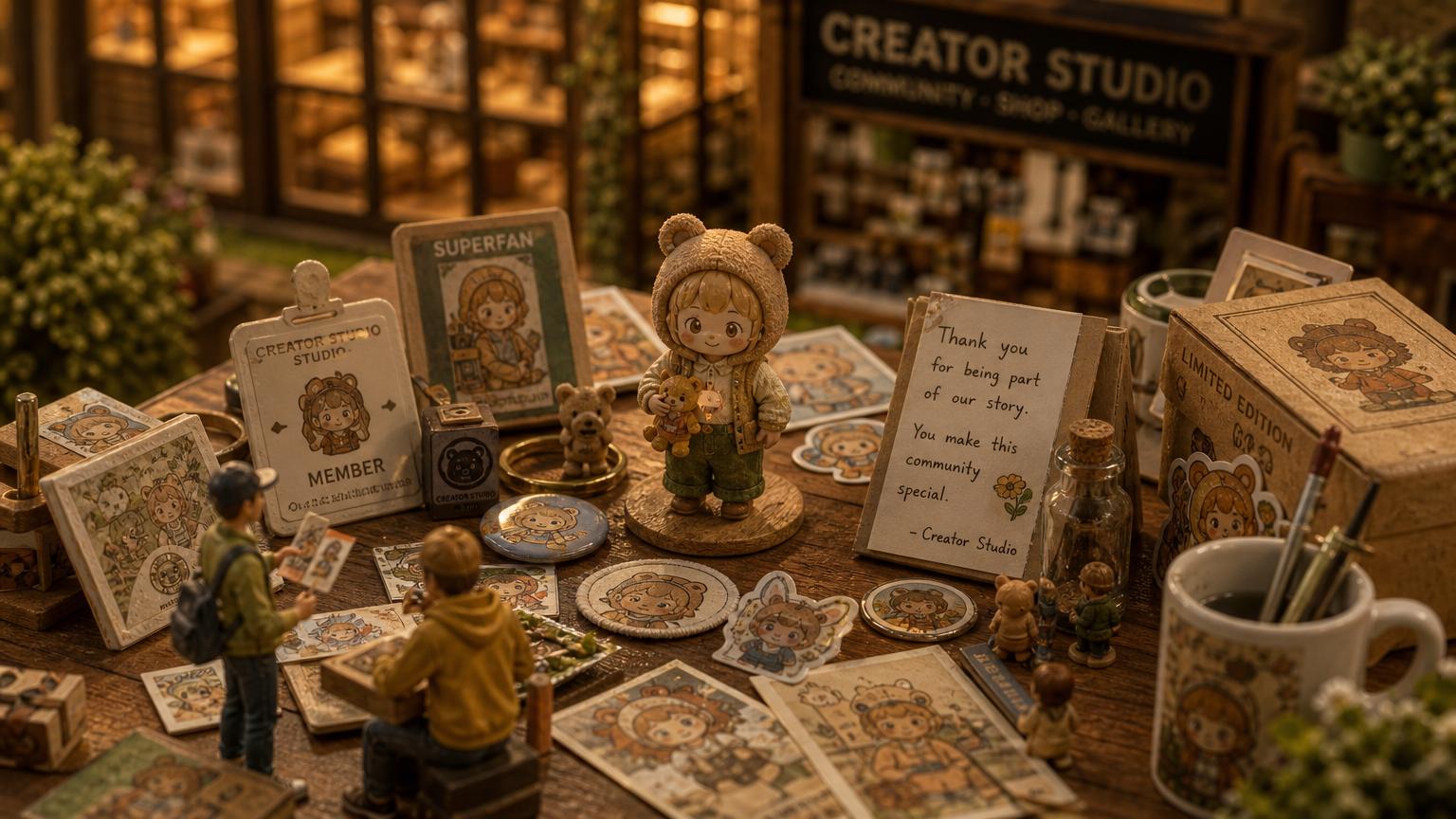
From Fandom to Commerce: The Fan-to-Merch Pipeline
The best merchandise often starts long before a product is designed.
It starts with fandom.
A creator may have a recognizable character, a recurring visual, an inside joke, a catchphrase, or a particular aesthetic that fans repeatedly reference. These elements can gradually become part of the creator's IP—and eventually become physical products.
The journey can look something like this:
Fan Culture → Emotion → Symbol → IP → Product → Merch → Community
Imagine a creator with a small cartoon character that repeatedly appears in their videos. Fans start commenting about it, creating memes around it, and asking for stickers. That is already a signal. The character has moved beyond being an illustration; it has become part of the community's identity.
From there, the same idea could become a sticker, poster, tote bag, figurine, apparel collection, or limited-edition collectible.
This is where creator commerce becomes interesting. The goal isn't simply to manufacture a product. It is to create a physical extension of something fans already recognize and care about. Genki fits naturally into this model by giving creators a way to connect original creative assets with merchandise and an online storefront, helping shorten the distance between fandom and commerce.
The product becomes more than merchandise. It becomes another piece of the creator's story.

How Creators Can Build Their Own Superfan Economy
Building a superfan economy doesn't mean launching ten products and hoping followers will buy them. It starts with understanding the people who already care.
🤔First, identify your core fans. Look beyond follower counts and pay attention to who repeatedly comments, shares, participates, responds to new ideas, and shows genuine interest in your creative world. These people are often your earliest customers and your best source of product inspiration.
😉Next, give fans something to belong to. A strong community doesn't need a complicated membership program. Sometimes a recurring character, shared joke, visual language, or creative ritual is enough to create a sense of identity.
🤓Then, make that identity tangible. This is where creator merchand physical products become powerful. Start with something that feels native to your content rather than forcing a random product into your brand. If your audience loves a character, build around the character. If they love a phrase, turn it into something meaningful. If they collect your artwork, consider a physical format that makes sense for collectors.
😃The next step is giving fans a reason to come back. Limited drops, seasonal collections, new characters, special editions, and evolving product lines can create anticipation without turning every post into a sales pitch. With a platform like Genki, creators can experiment with different product ideas and build a storefront around the creative world they've already established.
😍Finally, build a direct-to-fan relationship. Social platforms are excellent for discovery, but creators don't completely control their algorithms. A sustainable fan business should give your most loyal audience more ways to stay connected with your creative world—and more reasons to return.
The goal isn't to turn every follower into a customer. It is to create a natural path for the people who already love your work to become deeper participants.

The Real Metric Isn't Followers Anymore
Followers still matter. Reach still matters. Viral content still matters.
But they are no longer the whole story.
For creators building a business, the more interesting questions are becoming: How many people come back? How many actually participate? How many buy more than once? How many share your products without being asked? How many would be disappointed if your creative world disappeared tomorrow?
These are signals of fan loyalty and long-term value.
The future of the creator economy may therefore be less about building the biggest possible audience and more about building the strongest possible relationship with the right audience.
A million followers can give you reach. A thousand superfans can give you a community, customers, advocates, and a foundation for a brand.
And perhaps that is the real evolution of the creator economy: from collecting followers to creating belonging.
FAQ
👉What is the Superfan Economy?
The Superfan Economy is a model in which creators focus on building deeper relationships with highly engaged fans rather than relying primarily on audience size. These fans can support creators through purchases, communities, merchandise, collectibles, memberships, and other forms of direct participation.
✍️What is the difference between a fan and a superfan?
A fan regularly consumes and engages with a creator's content. A superfan goes further: they actively participate in the creator's community, recommend their work, purchase products, collect merchandise, and develop a stronger emotional connection to the creator's world.
✊How can creators monetize superfans?
Creators can monetize superfans through creator merch, digital products, memberships, exclusive drops, collectibles, experiences, and direct-to-fan commerce. The most effective approach is usually to create products or experiences that naturally reflect what fans already value.
🙌How can I turn followers into superfans?
Start by understanding what your most engaged followers care about, then give them opportunities to participate more deeply. Build recognizable creative elements, create a sense of community, develop products around your IP, and give loyal fans meaningful reasons to return.
Your Fans Could Be More Valuable Than Your Follower Count
Your audience is already telling you what they love. The characters they remember, the jokes they repeat, and the designs they keep asking about can all become opportunities to build something bigger.
With Genki, creators can turn creative ideas and original IP into physical products while building a more direct path from fandom to commerce. Instead of constantly chasing the next viral post, start creating something your most loyal fans actually want to own.
Your next 100,000 followers might bring attention. Your next 1,000 superfans could build a business.