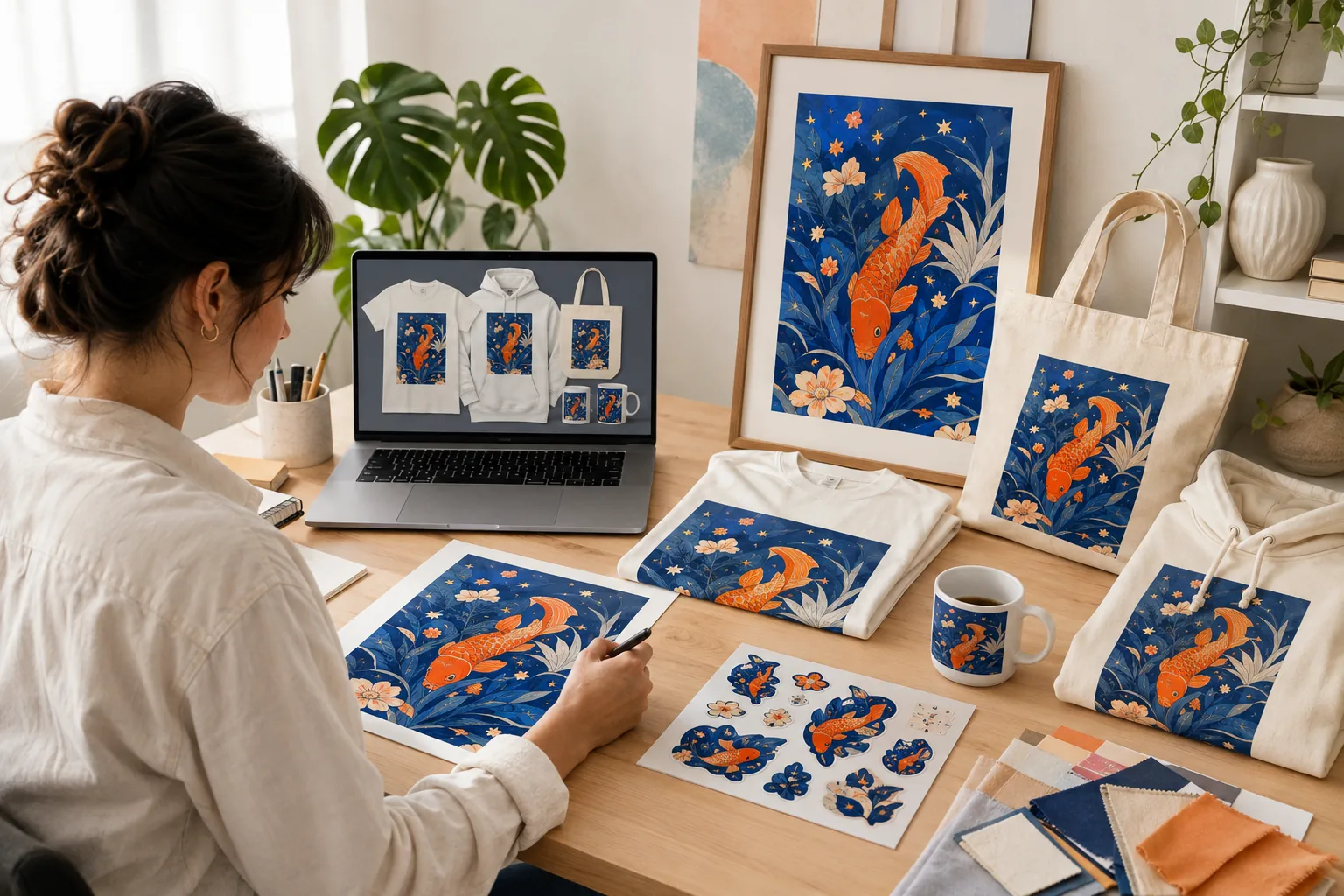
You do not always need dozens of new ideas to launch a print-on-demand collection. Sometimes, one strong piece of artwork is enough.
With AI POD design, creators can explore how a single illustration, pattern, or character might look across apparel, accessories, stickers, posters, and home products—before committing to a full launch.
The goal is not to place the same image on every available item. It is to build a collection in which each product feels different, while the overall visual identity remains connected.
One artwork can become many products, but every product still needs a reason to exist.
🎨 Start with Artwork That Can Travel
Strong print on demand design usually begins with artwork that can adapt to different shapes and surfaces.
Before creating products, identify the most useful parts of your design:
- The main illustration or character
- Supporting icons and decorative elements
- A recognizable color palette
- Background patterns or textures
- Small details that can work independently
For example, a large illustration may become the main image on a poster or the back of a hoodie. Smaller elements from the same artwork can become stickers, sleeve graphics, or repeating patterns.
You do not need to remove every detail. Instead, separate the design into flexible visual elements.
💡 Think of the artwork as a design system, not a single finished image.
This makes it easier to create different products without losing the original identity.
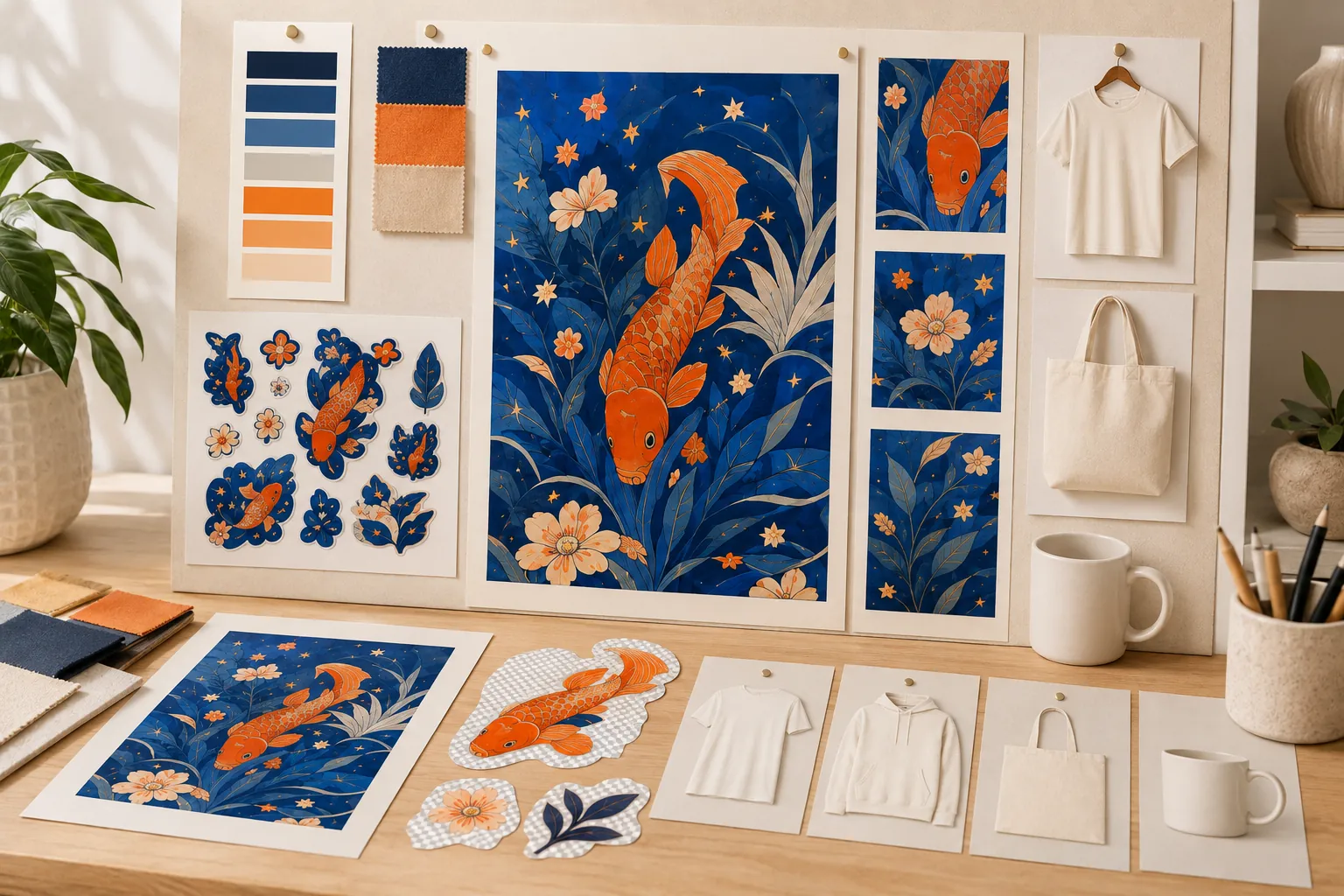
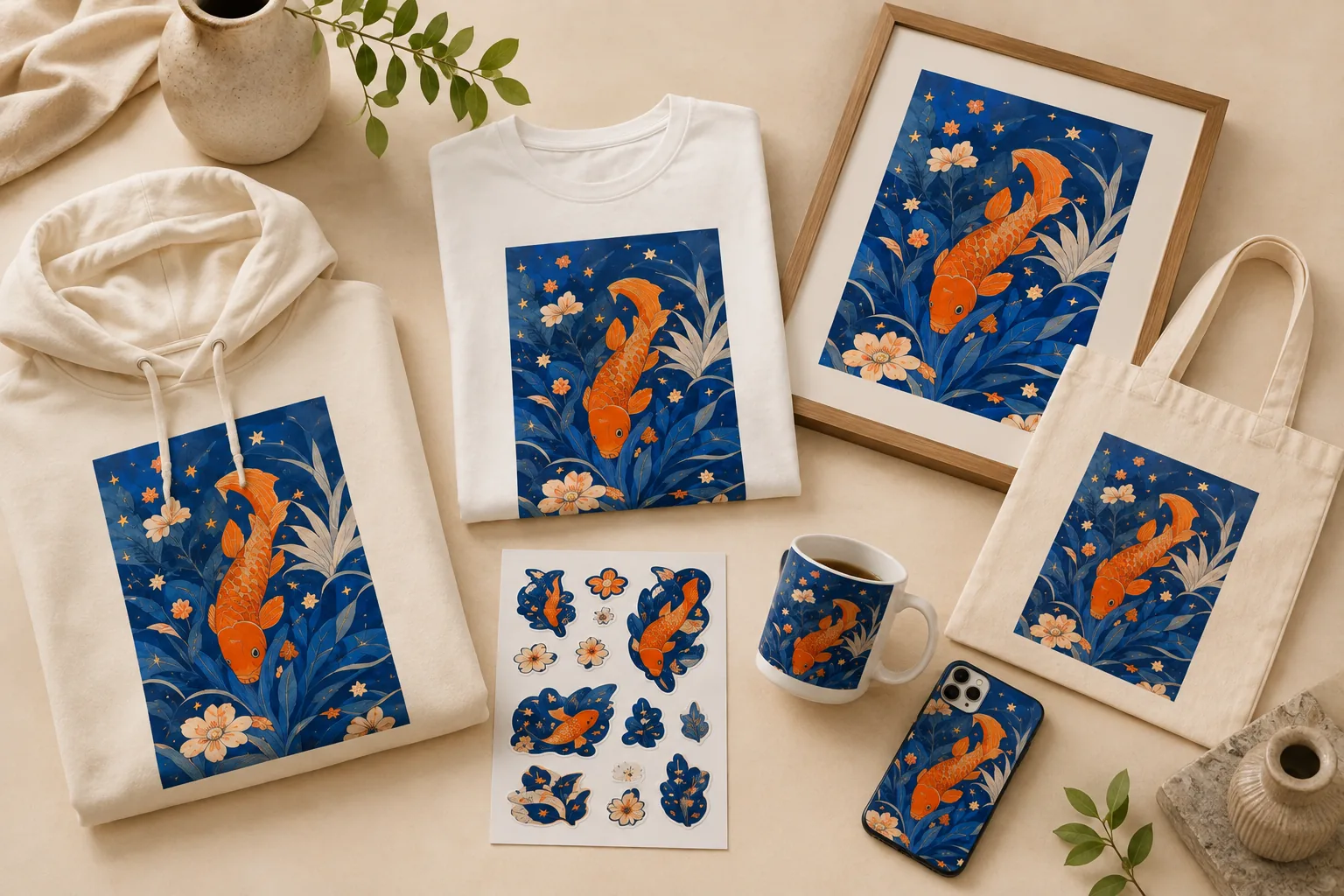
🛍️ Choose Products That Fit the Design
Not every design belongs on every product. The best POD products are those that give the artwork enough space to remain clear and attractive.
A detailed vertical illustration may work well on:
- Posters
- Art prints
- Tote bags
- Large back prints
- Notebook covers
A simple character or icon may be better suited to:
- Stickers
- T-shirts
- Mugs
- Phone cases
- Small accessories
You should also consider how customers will use the product. A bold illustration can turn a hoodie into a statement piece, while a subtle symbol may work better as a small chest print.
For more guidance on fabrics, color, patterns, and silhouettes, read the POD Apparel Design Guide.
Creators looking for seasonal POD products can also explore the Summer Beach POD Product Guide.
The right product does not simply display the artwork—it gives the artwork a new purpose.
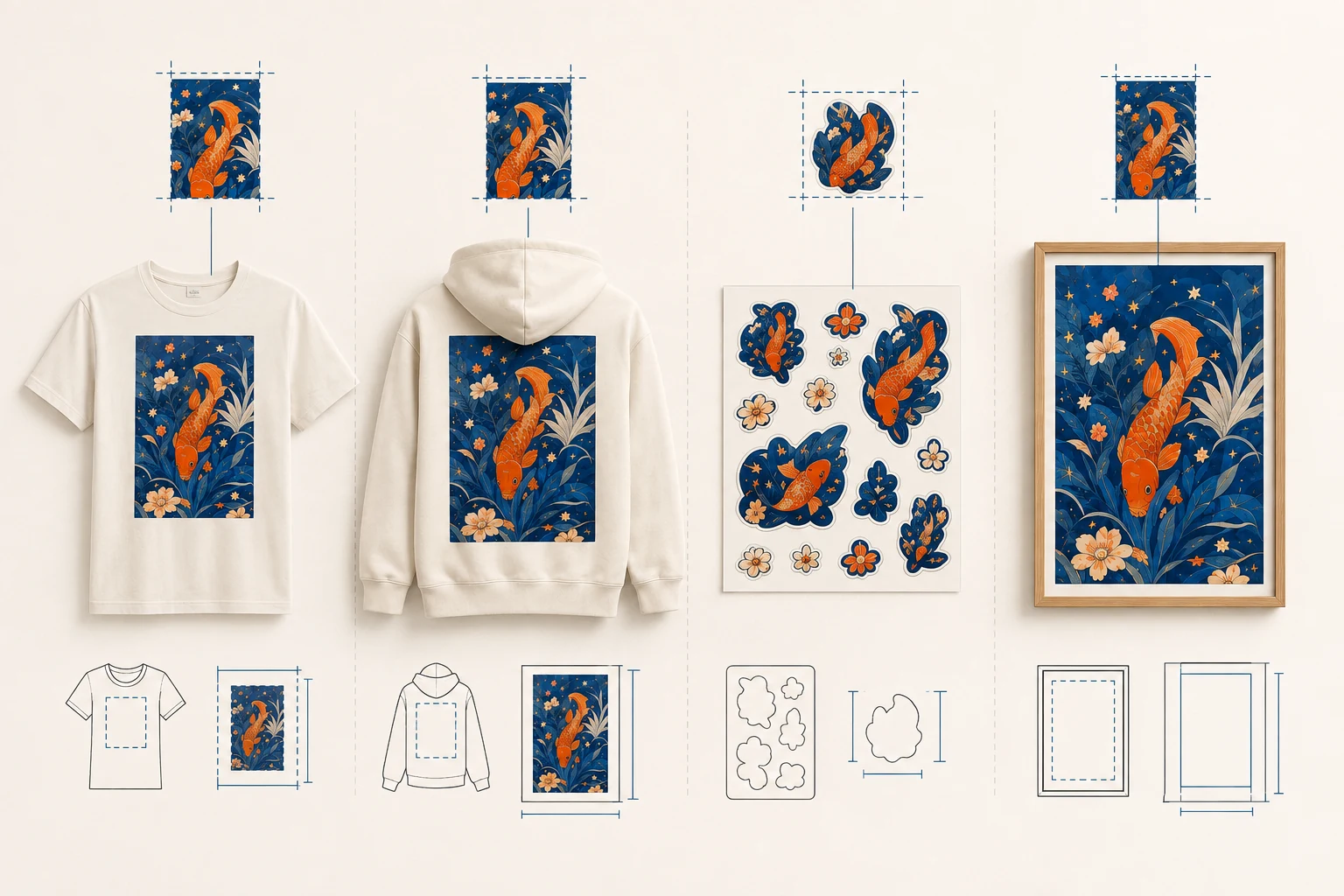
✂️ Adapt the Artwork for Every Product
A common POD design mistake is uploading the same file to every product without changing its scale, crop, or placement.
Good t-shirt design considers how the image sits on the body. A design that is too small may feel weak, while an oversized rectangular graphic may look heavy.
Hoodie design offers additional possibilities. You can use a large back print, a smaller chest element, or supporting graphics on the sleeves.
Sticker design requires simpler shapes and stronger outlines. Small details may disappear when the sticker is reduced.
Poster design works differently again. Posters offer more visual space, allowing detailed artwork, backgrounds, and storytelling elements to remain intact.
Before publishing a product, check:
- Image size and resolution
- Placement and visual balance
- Contrast against the product color
- Important details near seams or edges
- Whether the design still looks clear at thumbnail size
🔍 The artwork can stay consistent while its presentation changes.
This is what transforms a repeated image into a coordinated product collection.
✨ Build Faster with AI POD Design
Creating every mockup manually can make product development slow. Creators may need different design files, product templates, lifestyle images, descriptions, and promotional materials before a collection is ready.
Genki helps connect these stages.
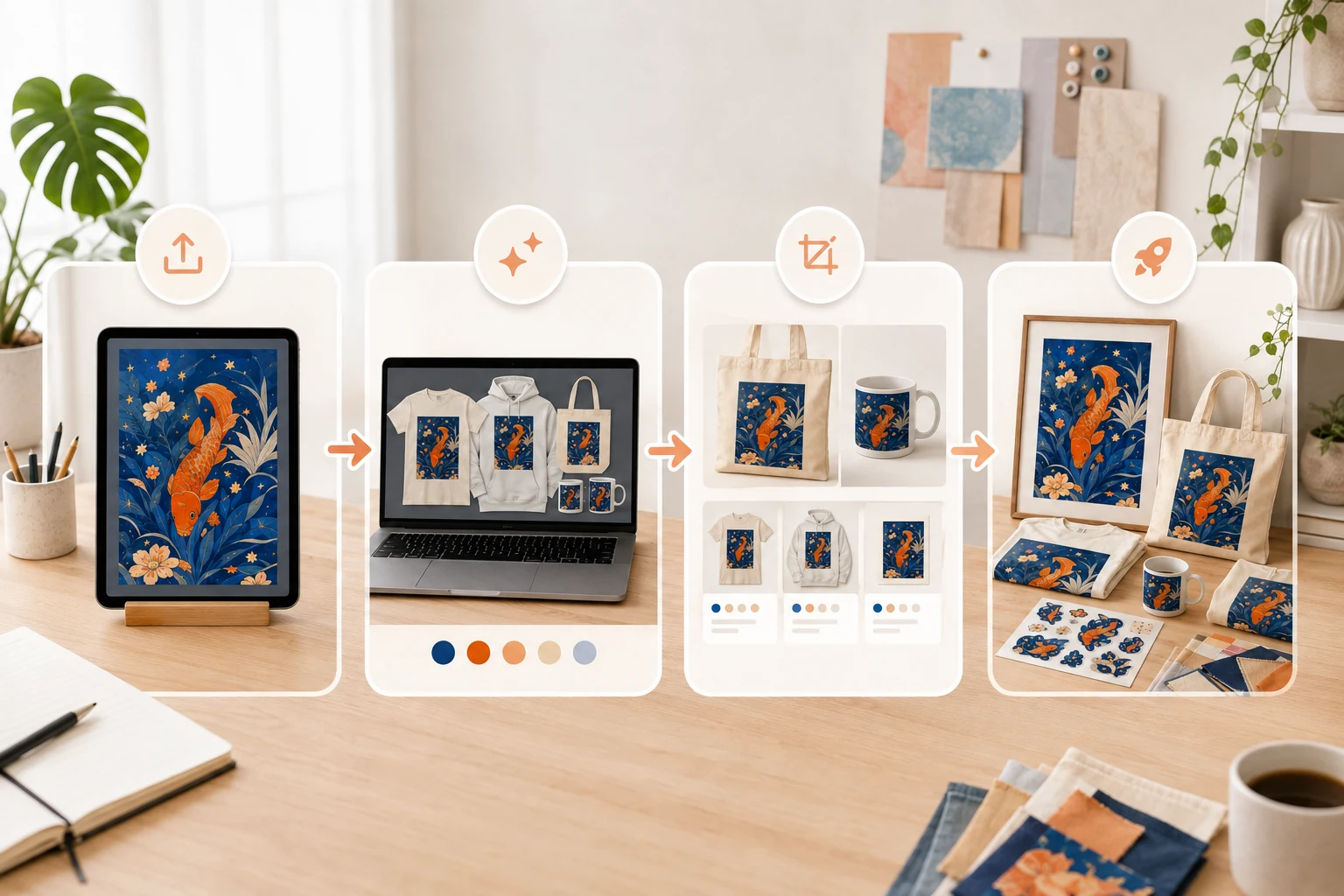
Creators can begin with an original image and explore how it works across different products. AI product mockups can make it easier to compare product types, layouts, and color combinations before selecting the strongest options.
Once the direction is clear, product visuals and information can be prepared for online selling.
A practical AI POD design workflow looks like this:
🎨 Upload Artwork → 🛍️ Explore Products → 🖼️ Review Mockups → ✂️ Refine Placement → 🚀 Prepare the Collection
The creator still makes the important decisions. AI simply makes it faster to see more possibilities and turn selected ideas into commerce-ready content.
To learn how this workflow supports faster launches, read How to Launch Products Faster with Genki.
🚀 Launch Small and Expand What Works
A POD business does not need a large catalog on its first day.
Begin with a focused collection of three to five products. This gives customers enough choice without weakening the design concept.
After launch, observe:
- Which product receives the most clicks?
- Which mockup attracts the most attention?
- Which colors generate stronger interest?
- Which product do customers request next?
Use this information to guide the next release.
A successful T-shirt can lead to a hoodie. A popular poster can become a premium print. Small design elements can become stickers, phone cases, or accessories.
The first collection tests the idea. The next collection builds the brand.
Over time, AI POD design can help creators turn one artwork into multiple coordinated releases without starting from zero every time.
🌟 Ready to Turn Your Artwork into Products?
Your design already has a visual identity. The next step is discovering where it can go.
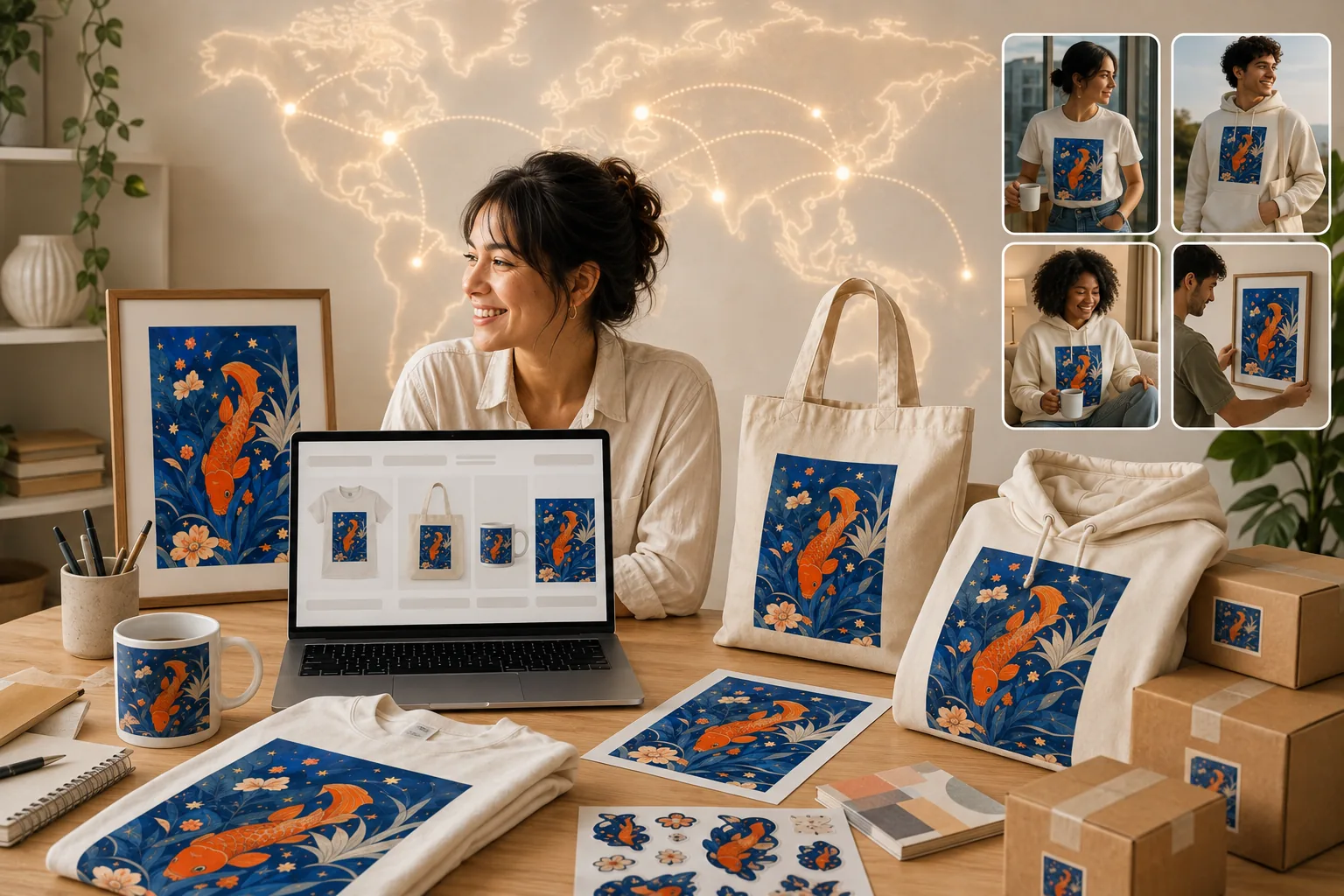
Join the Genki Creator Partnership Program to explore products, create visual assets, launch your collection, and reach customers around the world.
❓ Frequently Asked Questions
Do I need professional design experience to use AI POD design?
No. A clear creative idea and a suitable source image are enough to begin exploring products. However, creators should still review placement, image quality, and product suitability before publishing.
Can I use the same artwork on every POD product?
You can use the same visual identity, but the artwork should be adapted to each product. Scale, crop, layout, and color may need to change across apparel, stickers, posters, and accessories.
How many products should I include in my first collection?
Three to five coordinated products are usually enough to test demand while maintaining a clear collection identity.